


Lube
What a Lube Label Says About Condoms, and How to Read It
Water-based, glycerin-free, made in the USA: the front of a bottle tells you what is in it. The back tells you what it has been tested with. Here is how to read both, using our own label as the example.
Start with the back of the bottle
Turn any lube bottle around before you open it. The front sells, the back informs, and the line that matters most for many people sits on the back in small type: whether the product has been tested with condoms.
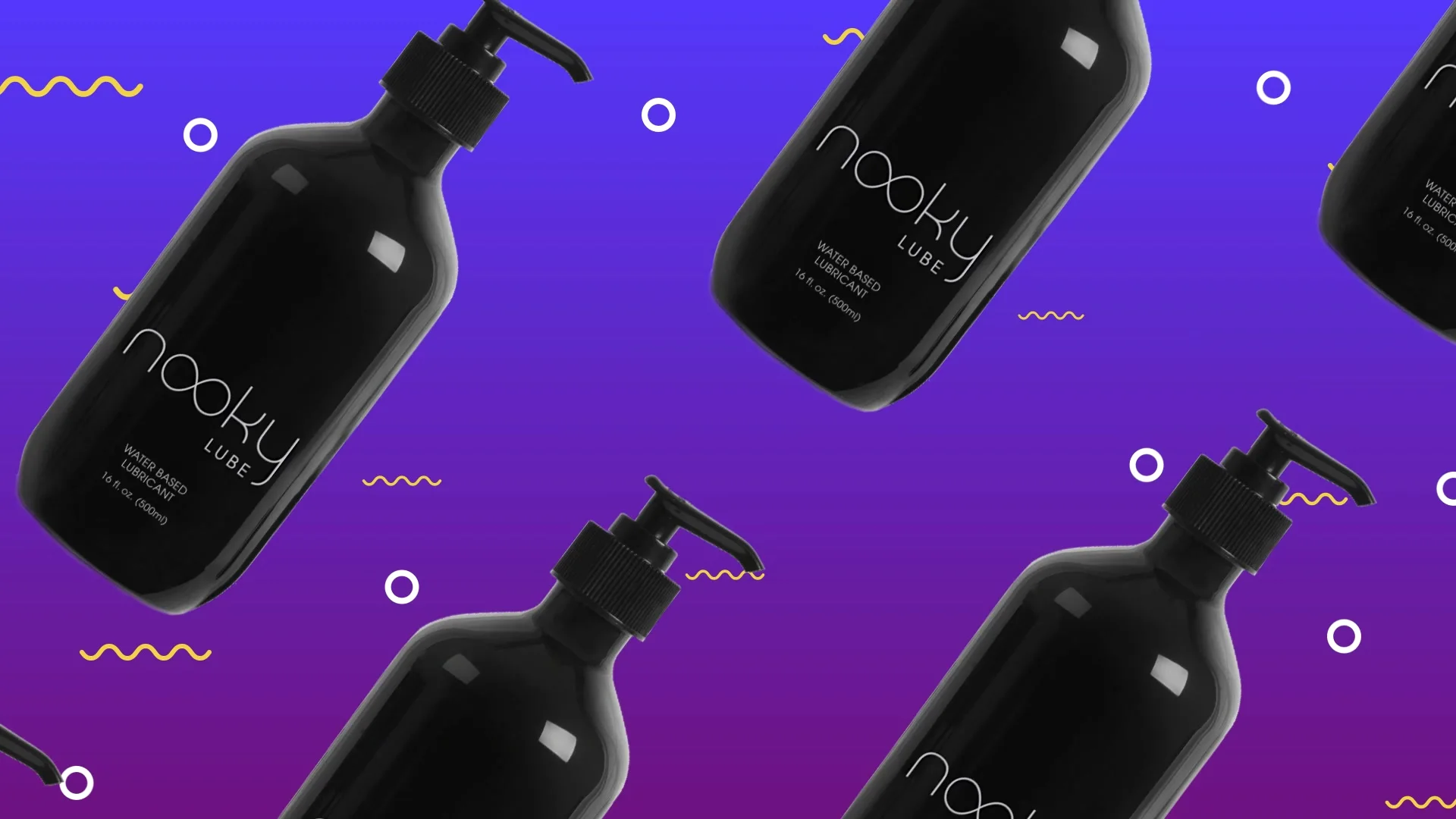
Our label says it plainly. Nooky lube has not been evaluated for condom compatibility and may damage condoms. That sentence is why we never call our lube condom-safe. If you rely on condoms for contraception or to lower the risk of infections, that sentence decides more than the scent, the price or the size of the bottle.
Why a water-based lube is not automatically condom-tested
It is easy to assume that water-based means condom-safe, and plenty of shoppers do exactly that at the checkout. The public health agencies do point people toward water-based lubes when they use latex condoms, and for good reason. The CDC tells you to use water-based lubricants and warns that oil-based products like petroleum jelly and body lotions weaken latex and break the condom. The World Health Organization advisory note on lubricants goes further and says water- and glycol-based lubes are generally accepted as compatible with natural rubber latex.
But generally accepted is a statement about a kind of product, not a test of a particular bottle. In the United States a personal lubricant is a Class II medical device, and the FDA definition of that device says a given lubricant may or may not be compatible with latex, polyisoprene or polyurethane condoms. The FDA lists a standard test method for exactly that question. A maker who has run it can say so on the label. A label that says the product has not been evaluated is telling you the test was not done for that bottle.
So the honest reading of our label is this: our gel is water-based, which is the kind of lube agencies recommend with condoms, and it has not been tested with them. If you rely on condoms, the safer choice is a lube whose own label says it was tested with your type of condom. For what the agencies say in full, see our lube guide.
Oil, latex and the massage oil on the same nightstand
The one rule every agency agrees on is about oil. The CDC lists baby oil, lotion, petroleum jelly and cooking oil among the products not to use with an external condom, because they cause the condom to break. The FDA wording for latex condom labels tells people not to use oil-based lubricants such as vegetable oil or mineral oil, as these may damage the condom. The WHO note puts coconut oil and palm oil on its list of household products to keep away from latex, and adds that polyisoprene condoms are just as sensitive to oil as latex ones.
This matters because a massage oil and a lube often live in the same drawer. Our six massage oils are plant oils on sweet almond or coconut oil. They are made for massage, and they are exactly the kind of product the agencies warn about. If a massage turns into sex with a condom, wash the oil off hands and skin with soap and warm water first.
The other lines on the back
Once you know where to look, the rest of a lube label reads quickly. Ours has five parts, and each one answers a question you might otherwise have to guess at.
| Label line | What ours says | What it means for you |
|---|---|---|
| Ingredients | Purified water, propylene glycol, hydroxyethyl cellulose, sodium PCA, potassium sorbate, citric acid | Six ingredients. If you know you react to one of them, you can check before you buy. |
| Made without | Petrochemicals, glycerin, parabens | Useful if glycerin or parabens are on your own list of things to avoid. |
| Uses | Lubrication of intimate areas. Not evaluated with condoms | The condom line. Read it before you rely on the lube with one. |
| Warning | Not a contraceptive, no spermicide. Stop if irritation occurs | It does not prevent pregnancy, and irritation is a reason to stop. |
| Storage | Room temperature, 68 to 77 °F | Keep it out of a hot car and off a sunny windowsill. |
Not a contraceptive, and no spermicide
Our label also says the lube is not a contraceptive and contains no spermicide. A lube does nothing to prevent pregnancy on its own. Some lubes and condoms carry a spermicide called nonoxynol-9, and the CDC advises against using it with condoms because it can cause irritation. Ours has none, which is one less thing to think about, and also means the lube adds no protection of any kind.
Glycols, osmolality and pH, in plain words
Lube makers sometimes print two numbers you may not recognize. The WHO note explains both. Osmolality is how concentrated a lube is compared with the cells of the skin it touches. A very concentrated lube can draw water out of those cells, so WHO suggests an ideal ceiling of 380 mOsm/kg and accepts 1,200 as an interim limit. It also explains that the number depends mostly on glycols such as glycerin and propylene glycol: the more of them, the higher it goes.
The second number is pH. WHO notes that a healthy vagina is normally acidic and suggests a vaginal lubricant should have a pH of about 4.5. Neither number is printed on our label, and we do not guess at them. What the label does tell you is that propylene glycol is the second ingredient and glycerin is absent. If your skin is sensitive to lubes, those two numbers are fair questions to take to your doctor.
When a lube is the thing that hurts
A lube is meant to make things more comfortable. Sometimes it does the opposite. The American College of Obstetricians and Gynecologists lists lubricants among the things that can cause contact dermatitis of the vulva, with itching, burning and pain, and suggests water-soluble lubricants for people who are prone to irritation or sensitivity. Our label gives the practical version: if irritation occurs, stop and consult a physician.
MedlinePlus, from the National Library of Medicine, adds a point worth keeping. A water-soluble lubricant may help with dryness during sex, but if dryness, burning, itching or painful sex does not go away when you use one, that is a reason to see your provider rather than to switch brands again and again.
A short checklist for the drawer
- Read the back label for the condom line before you rely on any lube with a condom.
- Keep massage oils, lotions and any other oil away from latex and polyisoprene condoms.
- Remember a lube is not a contraceptive, whatever else it says.
- Stop if a lube burns or itches, and see your doctor if it keeps happening.
- Store the bottle at room temperature, 68 to 77 °F, as the label asks.
If massage is part of your evening too, our massage oil guide covers the base oils, the nut oils on our labels and the patch test dermatologists suggest. And every Nooky label, word for word, is on our ingredients page.
