


Massage oil
Reading a Massage Oil Label: Nut Oils, Coconut and Fragrance
A massage oil goes on a lot of skin, often someone else's. Before the scent, read the base, the nut oils and the fragrance compounds. Here is how, using the labels of our six oils.
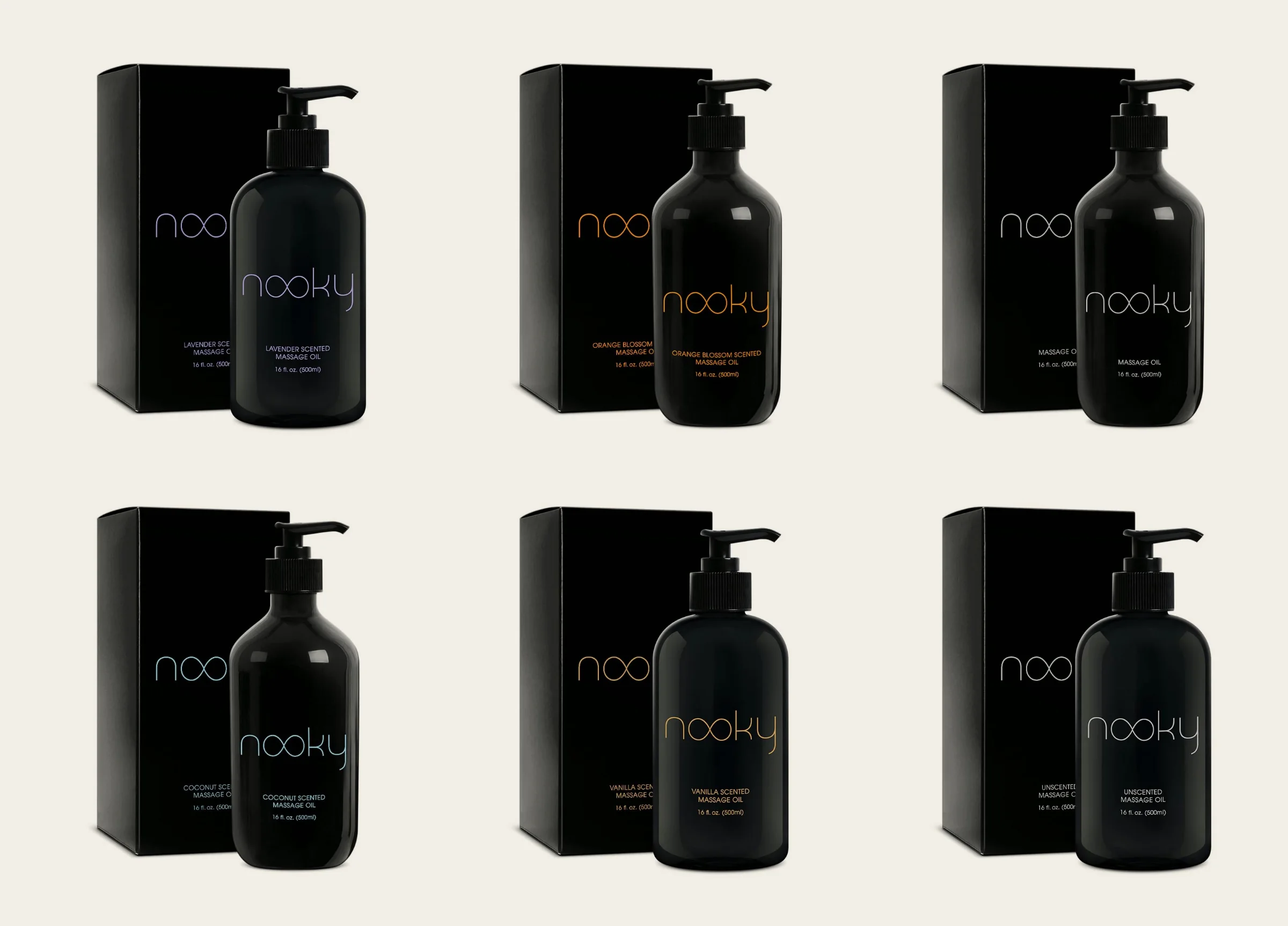
Why the label matters more than the scent
Most people choose a massage oil by smell. That is a fine way to choose between two oils you already know are right for the person on the towel. It is a poor way to find out whether an oil is right at all. A massage oil is a carrier oil, sometimes a blend of several, plus whatever gives it a scent, and every one of those parts can matter to somebody's skin.
The good news is that the label tells you. Our six oils carry between three and ten ingredients, printed on the back of each bottle in order. Reading them takes a minute, and it answers three questions: what is the base, are there tree nut oils, and which fragrance compounds are named.
Question one: what is the base?
The first ingredient on a massage oil label is usually the carrier, the oil that does the gliding. Three of ours start with sweet almond oil: lavender, orange blossom and geranium. Three start with coconut oil and carry fractionated coconut oil as well: coconut, vanilla and unscented.
You will feel the difference under your hands. Sweet almond oil gives a little more glide for long strokes before it sinks in. The coconut blends feel lighter and are absorbed sooner. Neither is better. They suit different hands and different skin. If you want the shortest possible label, our lavender oil lists only sweet almond oil, jojoba oil and lavender oil.
| Oil | First ingredient | Tree nut oils on the label | Fragrance compounds named |
|---|---|---|---|
| Lavender | Sweet almond oil | Sweet almond | None (lavender oil) |
| Orange blossom | Sweet almond oil | Sweet almond, macadamia | d-Limonene, linalool, citral |
| Geranium | Sweet almond oil | Sweet almond, macadamia | Geraniol, citronellol, linalool |
| Coconut | Coconut oil | None | None (coconut milk essential oil) |
| Vanilla | Coconut oil | None | None (essential oil fragrance) |
| Unscented | Coconut oil | Macadamia, sweet almond | None, no fragrance added |
Question two: are there tree nut oils?
This is the question to ask before anything else if someone in the room has a nut allergy. Sweet almond and macadamia are both tree nuts. Food Allergy Research & Education lists them, and notes that nut oils such as almond oil, often not highly refined, turn up in lotions and soaps. The American College of Allergy, Asthma and Immunology says tree nut oils may contain nut protein, and that people allergic to tree nuts should avoid skin products made with them.
Of our six oils, five list a tree nut oil. The one that surprises people is the unscented oil. It has no added fragrance, which makes it the natural pick for someone with touchy skin, and its label still lists macadamia nut oil and sweet almond oil. If nuts are the reason you are reading this, the two oils to look at are coconut and vanilla, which list no tree nut at all.
Coconut is a separate question
Coconut sits in an odd place. For years the FDA counted it as a tree nut on food labels. Since January 2025 it no longer does, and coconut does not have to be declared as a major food allergen. FARE notes that coconut allergy is uncommon but documented. Two things follow. First, a tree nut allergy does not automatically rule out a coconut oil, though an allergist is the person to confirm that for you. Second, that FDA change is about food labels and says nothing about skin. If coconut has ever given you a reaction, skip our coconut, vanilla and unscented oils.
Question three: which fragrance compounds are named?
Scented oils get their smell from essential oils and fragrance ingredients, and some labels name the individual compounds inside them. Our orange blossom oil names d-limonene, linalool and citral, and our geranium oil names geraniol, citronellol and linalool. All five are on the European list of 26 fragrance allergens that the FDA reproduces on its page about allergens in cosmetics.
Naming them is useful. The FDA points out that cosmetics do not carry food-style allergen warnings, that essential oils have no legal definition, and that words like fragrance-free or for sensitive skin have no federal definition either. So if you know you react to a fragrance compound, the ingredient list is the only reliable place to find it. The American Academy of Dermatology adds a caution that applies to our unscented oil too: products labeled unscented can still hold fragrance-related ingredients.
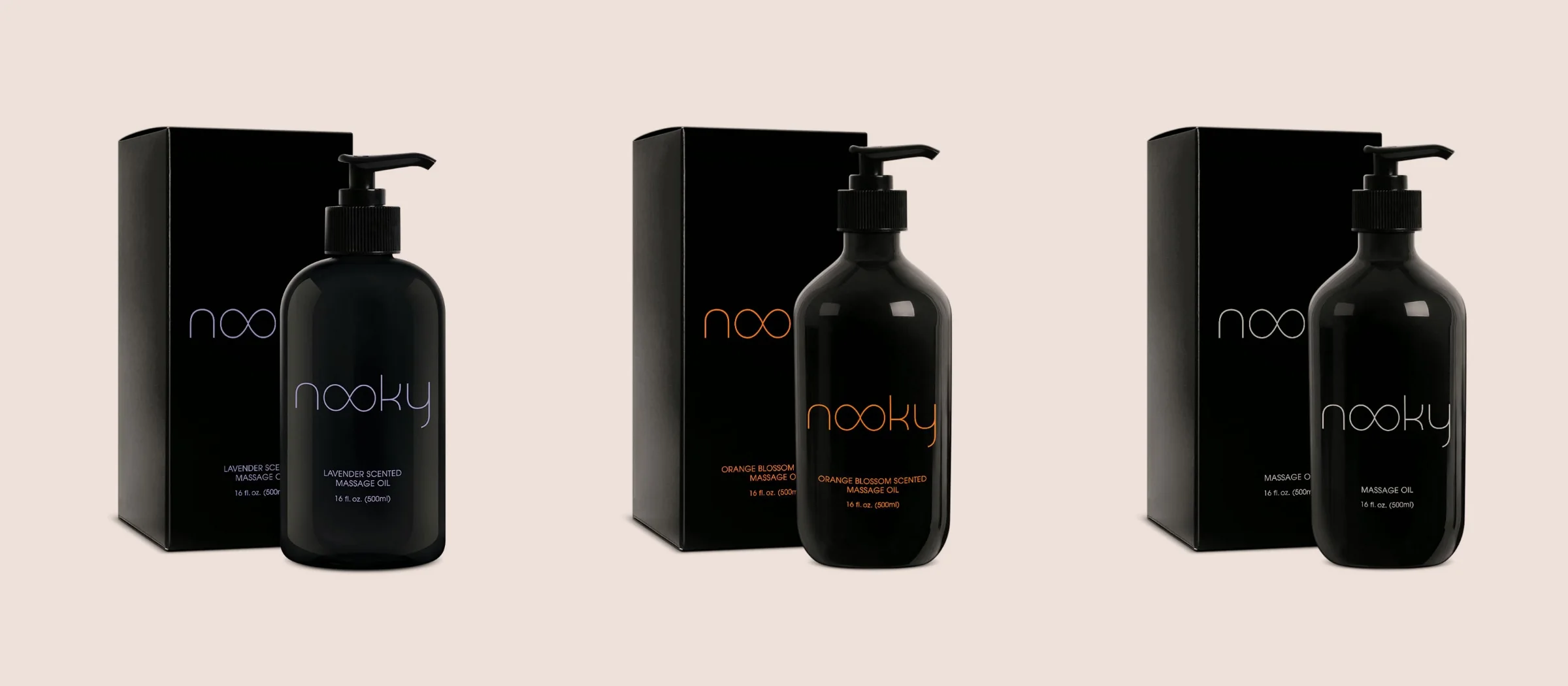
Citrus oils and the sun
Two of our oils carry orange oil: orange blossom and geranium. The National Cancer Institute notes that citrus essential oils on the skin before going out in the sun can cause sun sensitivity, and that long skin contact with essential oils can cause irritation or an allergic reaction. The practical answer is simple: if a massage with one of those oils is followed by a day outside, shower first. The NIH also notes that lavender on the skin can cause allergic reactions in some people.
The patch test, step by step
However carefully you read a label, skin decides. The American Academy of Dermatology describes a simple test for any new skin product, and it works for a massage oil:
- Pick a quarter-sized spot where the oil will not be rubbed or washed off, such as the inside of the arm or the bend of the elbow.
- Apply the oil there twice a day for 7 to 10 days.
- If the skin turns red, itchy or swollen, wash it off and do not use the oil again.
- If nothing happens, go ahead and use it more widely.
Test on the person who will be massaged, not on the person giving the massage. Our labels say the same thing in one line: if irritation occurs, discontinue use and consult a physician.
When the skin on the towel is not yours
Most of what a massage oil does, it does to someone else's skin, and that changes how you read the label. Ask the person you are about to massage about allergies before you pick the bottle, not halfway through: a nut allergy, a reaction to a lotion or a perfume, skin that is still tender after a sunburn. People often know the word for what bothers them, even when they have never read a massage oil label.
If they are not sure whether an ingredient is a problem, read the label to them, word for word. Every Nooky label is printed in full on our ingredients page, so you can do that from your phone before the bottle is open. A scent description on a product page cannot settle an allergy question. If the answer is still unclear, the person who can settle it is an allergist or a doctor, and until then the safer choice is no oil at all.
And one thing no label solves
Every massage oil is an oil. The CDC, the FDA and the World Health Organization all say oil weakens latex condoms, and the WHO note names coconut oil specifically. Keep massage oil for massage, and wash it off before sex with a latex or polyisoprene condom. If you want a lube for that part of the evening, our lube guide explains what our own lube label says about condoms.
All six oils, with their full labels, sit side by side on the massage oils shelf, and the two coconut-base oils with no tree nut on the label are on their own page.
